UK Online Gambling Sector Maintains Steady Expansion Under New Regulatory Framework
Alex Friedrich · Aug 29, 2026

UK Online Gambling Sector Maintains Steady Expansion Under New Regulatory Framework
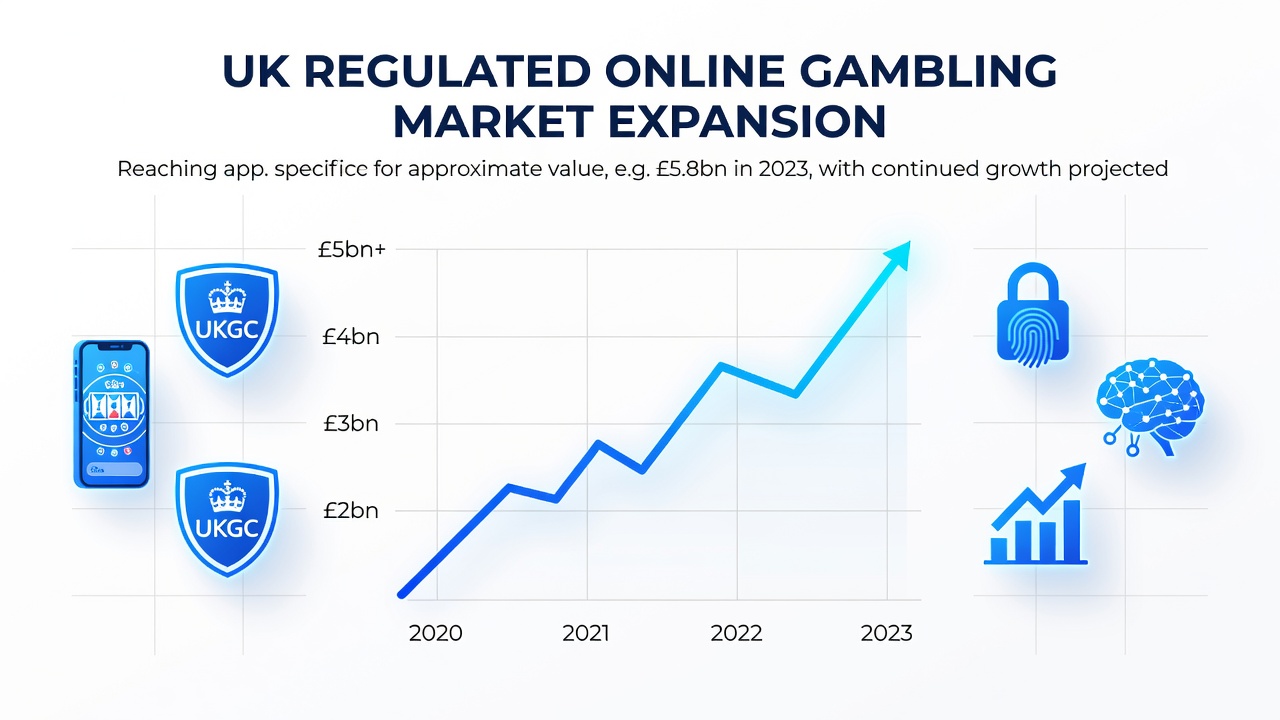
Market analysis shows the UK’s regulated online casino and gambling sector reached approximately $9 billion in 2025 while projections point to further growth reaching $13.2 billion by 2034 at an annual rate of around 4.2 percent and this trajectory continues even as fresh rules take effect across the industry.
Market Growth Trajectory Through 2034
Figures reveal consistent year-over-year increases in overall market value since the sector operates under strict oversight from the Gambling Commission and data indicates the expansion stems from rising participation alongside new product offerings that attract both existing and newer users while the long-term forecast remains anchored in the same 4.2 percent compound annual growth rate through the next decade.
Observers note that these projections account for ongoing adjustments to consumer protections yet they still forecast substantial cumulative gains by 2034 because the underlying demand patterns show resilience across multiple product categories including slots, table games and live dealer formats.
Regulatory Adjustments and Their Immediate Effects
New 2025 regulations introduced stake caps set at £5 for most players and £2 for those under 25 and these measures produced visible short-term impacts during the final quarter of 2025 with Gross Gambling Yield and bet volumes both registering declines in that period according to quarterly industry statistics covering the last three months of the year.
Stake limits applied uniformly across licensed operators and the changes coincided with broader efforts to tighten player safeguards while the same regulatory package also signaled upcoming increases in licence fees that will affect operator costs starting in subsequent periods.
Strong Rebound in Q1 2026 Performance Metrics
Online slots revenue climbed 12 percent year-over-year during the first quarter of 2026 reaching £773 million and monthly active accounts rose 6 percent to reach 4.8 million demonstrating that the market absorbed the earlier regulatory shifts without sustained contraction in participation levels.
Those tracking the data observe that slots remain the dominant revenue driver within the online segment and the rebound occurred even though some operators had already begun adjusting their product portfolios and marketing approaches in response to the stake caps introduced the previous year.
New Entrants and Business Models Adapting to Tightening Rules
New casino brands continue entering the UK market through white-label models that allow established licence holders to provide infrastructure while the incoming operators focus on branding and customer acquisition and this pattern persists amid the regulatory tightening that includes the planned licence fee increases.
White-label arrangements lower the barrier for new market participants because they avoid the full cost and complexity of securing independent licences yet every operator must still comply with the same stake limits and consumer protection standards that apply across the regulated space.
Context as of August 2026
As of August 2026 the market shows continued expansion with operators reporting stable or growing active user bases following the Q1 2026 results and upcoming licence fee adjustments remain the next scheduled change that industry participants prepare to integrate into their financial planning.
Data from the first quarter of 2026 serves as the most recent benchmark available and it indicates that revenue growth in slots outpaced the earlier dip recorded in Q4 2025 while the overall trajectory aligns with the longer-term projections toward the $13.2 billion mark by 2034.
Conclusion
The combination of established growth forecasts, measured regulatory interventions and resilient quarterly performance figures illustrates how the UK regulated online gambling market continues to evolve while maintaining its position as one of the largest and most closely supervised sectors globally and further updates on licence fee changes will provide additional clarity on operator economics in the periods ahead.