Shifts in Promotional Strategies as Bingo Platforms Adapt to Different Player Commitment Levels
Mia Simon · Sep 12, 2026
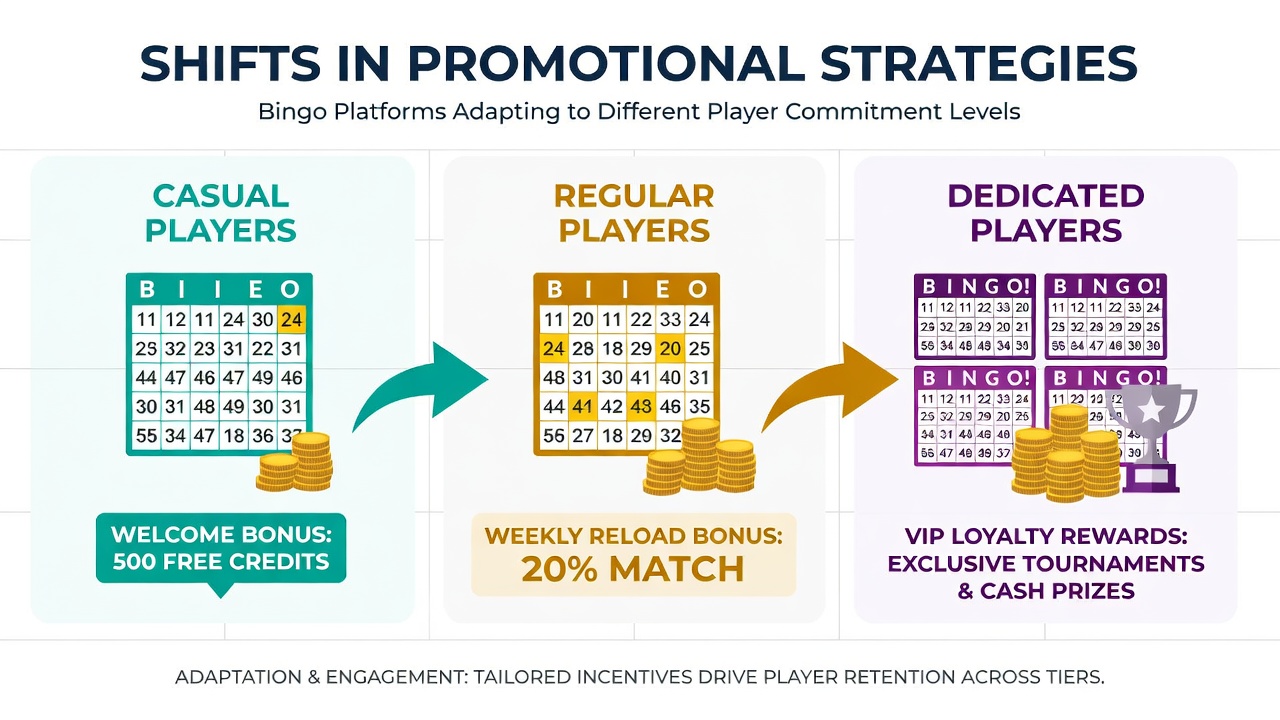
Shifts in Promotional Strategies as Bingo Platforms Adapt to Different Player Commitment Levels
Online bingo operators have adjusted their promotional approaches to match varying levels of player engagement, moving beyond uniform welcome offers toward tiered systems that respond to behavioral data. Platforms now segment users based on frequency of play, session duration, and deposit patterns, which allows for targeted incentives that align with commitment levels observed across different markets.
Research from the Responsible Gambling Council indicates that low-commitment players, those who participate sporadically, respond best to entry-level bonuses such as free cards or matched deposits on first play. These offers focus on reducing initial barriers, and data shows conversion rates improve when promotions include clear time limits and simple wagering requirements.
Segmenting Players by Commitment Metrics
Bingo sites track metrics like average weekly sessions and total spend to classify participants into casual, moderate, and dedicated categories. Casual players often receive time-sensitive free games that encourage trial without long-term obligations, while moderate users see promotions tied to consistent weekly activity. Dedicated players encounter personalized loyalty structures that reward ongoing participation through accumulated points and exclusive room access.
Operators apply these segments using automated systems that update in real time, and reports from Gambling Research Australia confirm that such data-driven categorization has increased retention across multiple jurisdictions since early 2025. The approach avoids one-size-fits-all tactics that previously led to higher churn among less frequent participants.
Acquisition Tactics for New and Casual Users
New player promotions emphasize immediate value through no-deposit bonuses and low-minimum deposit matches, which studies link to higher sign-up completion rates. Platforms integrate these offers with social features such as shared jackpot rooms to build early engagement, and analysts note that September 2026 figures from industry trackers revealed a 12 percent rise in first-month activity when acquisition campaigns included community elements.
Seasonal campaigns also target casual users during peak periods like holidays, combining bingo variants with limited-time multipliers. These strategies rely on A/B testing to refine messaging, ensuring that offers remain relevant without overwhelming users who show limited repeat interest.
Retention and Loyalty Mechanisms for Higher Engagement
Moderate and high-commitment players encounter progression-based rewards that scale with continued play. Cashback structures, birthday bonuses, and tiered VIP clubs appear in this category, often funded through operator revenue shares rather than fixed marketing budgets. Evidence from academic reviews at the University of Sydney suggests these layered incentives correlate with longer average player lifecycles when they incorporate clear milestones and transparent redemption options.
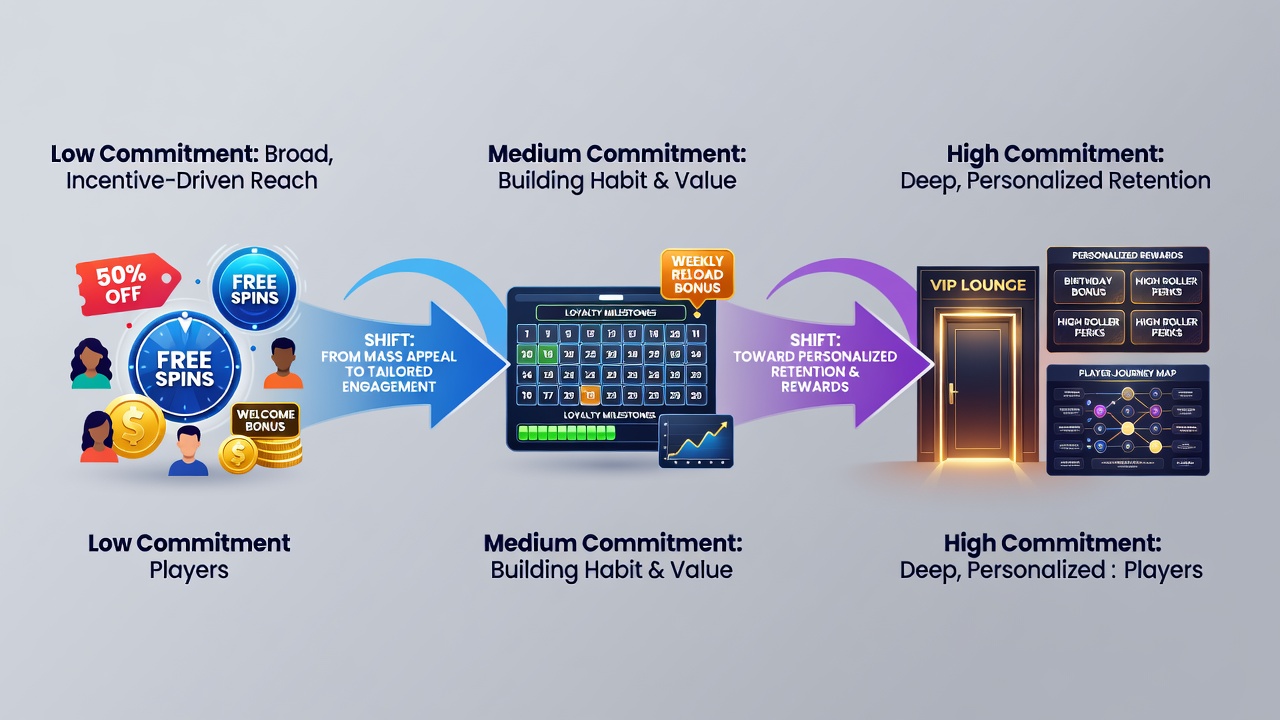
High-commitment segments also benefit from personalized communications that reference past gameplay, such as invitations to private tournaments. Platforms coordinate these efforts with responsible gambling tools, including session reminders and deposit limits, to maintain compliance while sustaining engagement.
Technology and Regulatory Influences on Strategy Evolution
Artificial intelligence tools now help platforms predict commitment shifts and adjust promotions dynamically, reducing manual campaign management. In September 2026, updates to digital advertising standards across several regions prompted further refinements, with operators emphasizing verifiable player value in all marketing materials. Cross-border operators have adopted unified tracking systems that respect regional rules while maintaining consistent segmentation logic.
Industry associations report that these adaptations have supported steady revenue growth even as overall marketing spend per user has declined in mature markets. The focus remains on matching promotional intensity to demonstrated player interest rather than broad acquisition pushes.
Conclusion
Bingo platforms continue refining promotional frameworks to reflect actual commitment patterns, supported by ongoing data collection and regulatory alignment. This evolution has produced more precise incentive structures that address distinct player groups without uniform approaches. Observers expect further integration of predictive analytics as platforms monitor engagement trends through the remainder of 2026 and beyond.